
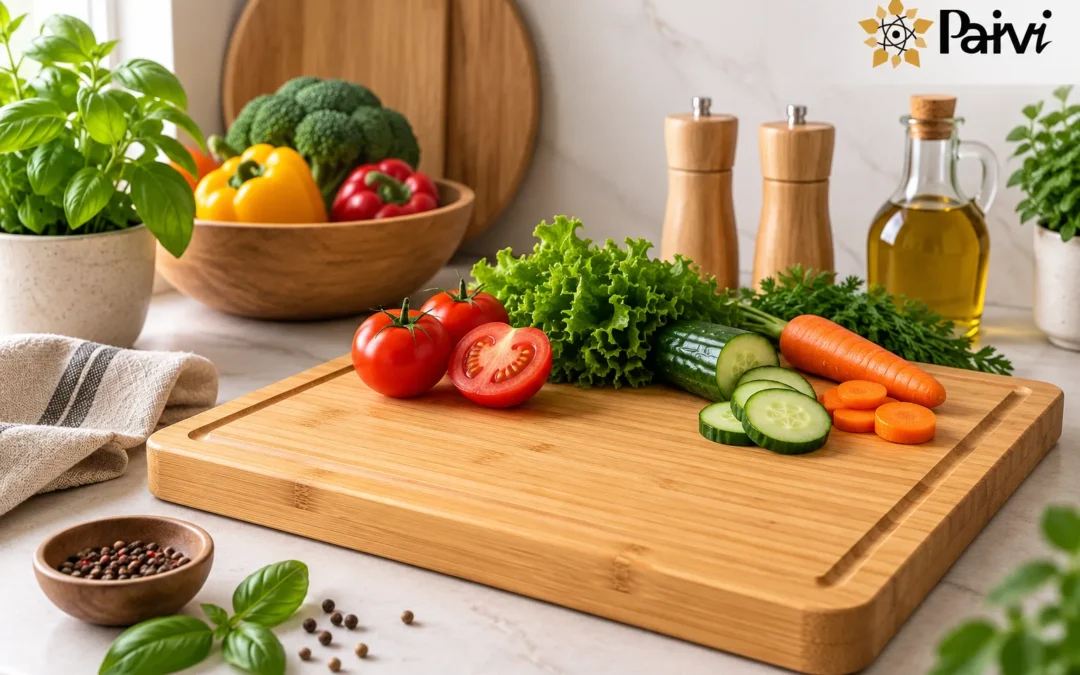
Bamboo cutting boards are a popular choice for home kitchens because they are light, durable, and made from a renewable material. They also have a clean, natural look that works well in modern kitchens.
But are bamboo cutting boards good for everyday use? Yes, for many people, they are a practical choice. However, they also have some drawbacks. Bamboo can be harder on knife edges than some wood boards, and most bamboo cutting boards need to be washed by hand and kept dry.
The quality of the board also matters. A good bamboo cutting board should have a smooth surface, strong construction, and a finish suitable for food contact.
Are Bamboo Cutting Boards Good?
Yes, bamboo cutting boards are good for everyday food preparation when they are made well and cared for properly.
Bamboo is a dense material with lower moisture absorption than many softer woods. This can help the board resist stains and moisture when it is cleaned and dried correctly. Bamboo is also light enough to move and store easily.
However, bamboo is not the best choice for every kitchen. Its hard surface can cause knife edges to wear faster than they would on some softer wood boards. It also should not be soaked or placed in a dishwasher unless the manufacturer clearly states that the board is dishwasher safe.
The University of Maine Cooperative Extension lists bamboo as an environmentally friendly cutting-board material that is harder and less porous than many wood options, while also noting that it can dull knives and crack when it is not properly maintained.
Pros and Cons of Bamboo Cutting Boards
| Pros | Cons |
|---|---|
| Made from a fast-growing renewable material | Can dull knives faster than softer wood |
| Lightweight and easy to handle | Usually needs hand washing |
| Dense and less porous than some woods | Can crack or warp with poor care |
| Resists knife marks well | Should not be soaked in water |
| Natural and attractive appearance | Quality varies between manufacturers |
| Suitable for everyday food preparation | May contain adhesives between bamboo strips |
The right choice depends on how you cook and how much care you want to give your cutting board.
Benefits of Bamboo Cutting Boards
1. Bamboo Is a Renewable Material
One of the main reasons people choose bamboo is its ability to grow quickly. Bamboo can be harvested as a renewable plant material, making it an attractive option for people looking to reduce their use of slower-growing wood.
However, a bamboo cutting board is not automatically a sustainable product. Its environmental impact also depends on how the bamboo is grown, processed, transported, finished, and packaged.
PAIVI focuses on renewable and responsible materials across its product range, including bamboo and recycled materials. This approach is part of its wider focus on reducing plastic use and creating more sustainable products.
2. Bamboo Cutting Boards Are Lightweight
Bamboo boards are generally easy to lift, move, wash, and store. This can be useful in smaller kitchens or when the board needs to be moved often.
A lighter board can also be easier to use for simple tasks such as cutting fruit, vegetables, bread, and cheese.
3. They Have a Hard, Dense Surface
Bamboo is harder and denser than many softer woods. This helps the surface resist deep knife marks during normal use.
Fewer deep cuts can make the surface easier to keep clean. However, hardness is also one of bamboo’s main disadvantages because it can be less gentle on knife edges.
4. They Have a Natural Appearance
Bamboo has a simple grain and light natural color. This makes bamboo cutting boards suitable for both food preparation and serving.
A well-finished board can be used to serve bread, cheese, fruit, or snacks after it has been properly cleaned.
Are Bamboo Cutting Boards Safe?
Bamboo cutting boards can be safe for food preparation when they are made for food contact and maintained correctly.
The important point is that a finished bamboo cutting board is not always made from one solid piece of bamboo. Many boards are made by joining bamboo strips with adhesive.
For this reason, the quality and materials used by the manufacturer matter.
When buying a bamboo cutting board, look for:
- A product clearly made for food contact
- A smooth, even cutting surface
- Strong and clean joints
- A reputable manufacturer
- Clear care instructions
- Information about the finish or adhesive when available
Do not assume that every product labelled “bamboo” has the same construction or quality.
Can You Cut Meat on a Bamboo Cutting Board?
You can use a bamboo cutting board for food preparation, but raw meat requires extra care.
Cross-contamination is a bigger concern than the material alone. Raw meat and poultry can carry harmful bacteria. After preparing these foods, the cutting board should be cleaned properly before it is used for other foods.
For households that prepare raw meat often, using a separate cutting board for raw meat and another for fruits and vegetables can be a simple way to reduce cross-contamination.
If you prefer a board that can be placed in a dishwasher for sanitising, check the manufacturer’s instructions before choosing bamboo. Many traditional bamboo boards are designed for hand washing.
Are Bamboo Cutting Boards Good for Knives?
This is one area where bamboo has a clear disadvantage.
Bamboo is harder than many traditional cutting-board woods, so it can cause knife edges to wear faster.
This does not mean you cannot use good knives on bamboo. It means that people who want to protect very sharp or expensive knives may prefer a softer wood cutting board.
Serious Eats also highlights the hardness of bamboo as a concern for knife edges and notes that softer woods can be a better choice for preserving sharp knives.
For everyday kitchen knives, bamboo can still be a practical option. If keeping a knife extremely sharp is your main concern, compare bamboo with softer wood before buying.
How to Clean a Bamboo Cutting Board
Proper cleaning is important for both hygiene and board life.
Follow these simple steps:
- Wash the board after use. Use warm water and mild dish soap.
- Do not soak it. Avoid leaving the board in a sink full of water.
- Rinse it well. Remove soap and food residue.
- Dry it immediately. Wipe both sides with a clean towel.
- Let it dry fully. Store it in a dry place with good airflow.
- Oil it when needed. Use a food-grade mineral oil or a suitable board conditioner according to the manufacturer’s instructions.
Avoid putting a traditional bamboo board in the dishwasher. High heat, water, and long wash cycles can cause warping, cracks, or damage to the joints.
How to Maintain a Bamboo Cutting Board
Regular maintenance can help your bamboo cutting board last longer.
Use Food-Grade Mineral Oil
Bamboo can become dry over time. A food-grade mineral oil can help maintain the surface and reduce excessive drying.
Do not use ordinary cooking oils such as olive oil for long-term board care. These oils can become rancid and may leave an unpleasant smell.
Keep the Board Dry
Moisture is one of the main things to avoid. Do not leave the board wet on the counter or store it while it is still damp.
If the board has been exposed to a lot of water, allow it to dry completely before storing it.
Replace Damaged Boards
A cutting board should be replaced when it develops deep cracks, severe warping, or deep grooves that are difficult to clean.
A damaged surface is harder to maintain properly and may no longer provide a clean preparation surface.
Bamboo vs. Other Cutting Board Materials
| Feature | Bamboo | Hardwood | Plastic |
|---|---|---|---|
| Renewable material | Yes | Depends on wood source | No |
| Knife-friendly | Moderate | Usually better | Moderate |
| Weight | Light | Usually heavier | Light |
| Water resistance | Good with proper care | Varies | High |
| Dishwasher use | Usually no | Usually no | Often yes |
| Maintenance | Moderate | Moderate | Low |
| Natural appearance | Yes | Yes | Varies |
There is no single best cutting-board material for everyone.
Bamboo is a good middle-ground option for people who want a natural, lightweight, renewable material and do not mind hand washing and basic maintenance.
What to Look for When Buying a Bamboo Cutting Board
Not all bamboo cutting boards are made the same. Before buying one, check:
Thickness: A thicker board is usually more stable during cutting.
Surface: Look for a smooth surface without rough patches or visible cracks.
Construction: Check that the bamboo strips are joined evenly and securely.
Finish: Choose a product with a finish intended for food-contact use.
Size: Make sure there is enough cutting space for the food you prepare.
Care instructions: Look for clear instructions from the manufacturer. Do not assume a bamboo board is dishwasher safe.
Quality: A very low price may not always mean good value. Construction and materials have a direct effect on how long the board lasts.
Are Bamboo Cutting Boards Worth It?
For many kitchens, yes.
Bamboo cutting boards offer a useful mix of durability, light weight, natural appearance, and renewable material. They work well for everyday tasks such as cutting vegetables, fruit, bread, and cheese.
Their main drawbacks are their harder surface, which can wear knife edges faster, and their need for proper care. Most bamboo boards should be hand washed, dried quickly, and protected from long exposure to water and heat.
If you want a practical cutting board made from a renewable material, bamboo is worth considering. If your main priority is protecting high-end knives or using a dishwasher, another material may suit you better.
Final Verdict
Are bamboo cutting boards good? Yes, provided you choose a well-made board and care for it properly.
They are lightweight, durable, attractive, and made from a renewable material. They are also suitable for many everyday food preparation tasks.
But bamboo is not maintenance-free. Keep it dry, avoid soaking it, follow the manufacturer’s cleaning instructions, and replace it if deep cracks or heavy damage appear.
For a broader look at how bamboo products fit into sustainable living and responsible product choices, you can also explore PAIVI’s range of eco-friendly products and sustainable hospitality solutions