
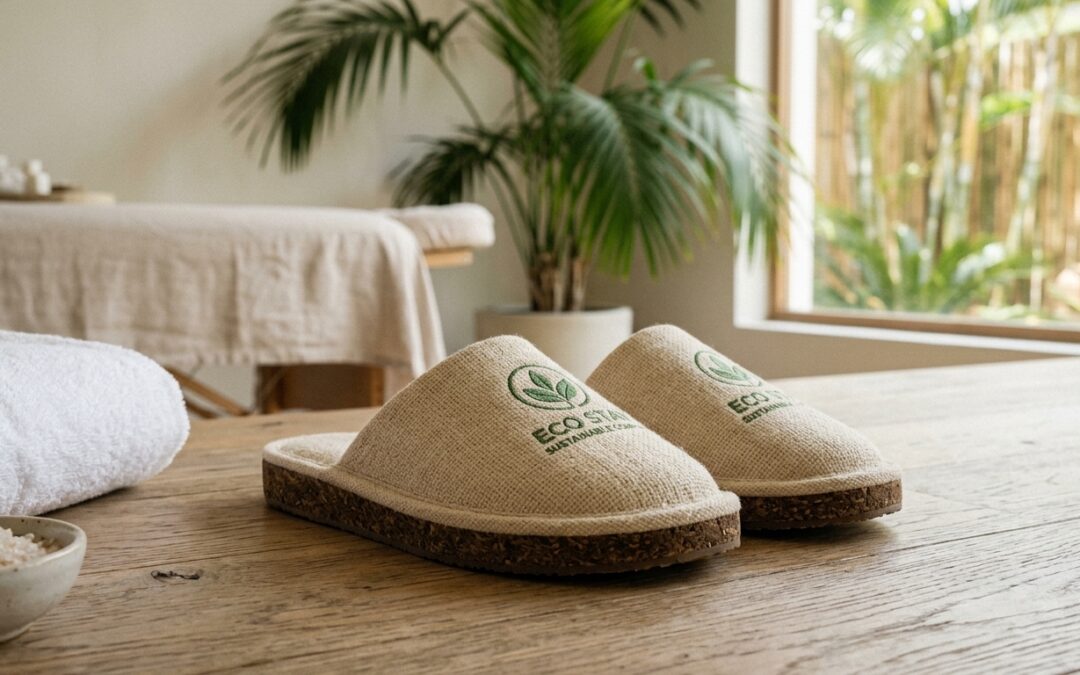
Hotel slippers are a small part of a guest room, but they serve a practical purpose. They provide comfort, support cleanliness, and can also complement the style of a property. For resorts, spas, boutique hotels, and luxury accommodation, selecting the right slipper requires more than choosing a suitable colour or design.
Material, sole type, comfort, durability, hygiene, packaging, and disposal all need attention. Hotels also need to decide whether slippers are intended for one-time use or repeated use.
For businesses looking to make more responsible purchasing decisions, eco-friendly hotel slippers can be considered as part of a wider approach to hospitality supplies. The important point is to assess the complete product rather than focusing on one material or environmental claim.
Why Should Hotels Consider Eco-Friendly Slippers?
Hotel slippers can be used in guest rooms, spa areas, wellness facilities, and other indoor spaces. Their requirements can differ depending on where they are provided and how they are handled.
A guest room slipper may need to prioritise softness and appearance. A spa may require a different sole and greater attention to moisture exposure. A reusable slipper also needs a cleaning process that supports hygiene between uses.
Hotels should consider the following when selecting slippers:
- Comfort: The material should feel comfortable during normal use.
- Material: Natural fibres and other suitable materials can support responsible purchasing goals.
- Practical use: The slipper should match the environment where guests will wear it.
- Durability: Better construction can reduce frequent replacement.
- Waste: Packaging, reuse, materials, and disposal all affect the overall product impact.
- Presentation: The design should suit the hotel’s interiors and guest experience.
A natural material alone does not make a finished slipper environmentally responsible. The sole, stitching, adhesives, dyes, packaging, expected lifespan, and disposal method also need to be considered.
Choose the Right Slipper Material
Different hospitality businesses have different requirements. A boutique hotel may want a natural appearance, while a spa may place greater importance on softness and comfort.
Understanding the main material options can make the purchasing process easier.
Jute Slippers
Jute slippers have a textured appearance that can work well with natural or earthy interiors. They may suit properties that want to incorporate natural fibres into their guest amenities.
Suitable for: Boutique hotels, eco-conscious resorts, nature retreats, and guest rooms with natural design themes.
When choosing jute slippers, check the softness, flexibility, stitching, and sole construction. Jute is a natural fibre, but the finished product can contain other materials. Adhesives, dyes, backing materials, and sole components should therefore be reviewed before making environmental claims.
Waffle Cotton Slippers
Waffle cotton slippers have a textured fabric surface and a lightweight feel. Their simple appearance can work well in guest rooms where comfort and presentation need to be balanced.
Suitable for: Boutique hotels, premium accommodation, serviced properties, and selected spa environments.
Look at the quality of the cotton, stitching, shape retention, and care requirements. If the slippers are designed for repeated use, the supplier should provide clear cleaning instructions.
Terry Cotton Slippers
Terry cotton has a looped fabric texture that gives the slipper a soft feel. This makes it suitable for hospitality settings where guest comfort is a major consideration.
Suitable for: Luxury hotels, resorts, wellness retreats, and guest rooms where softness is important.
Cotton terry fabric can absorb moisture. Hotels using these slippers repeatedly should therefore have suitable procedures for washing, drying, inspection, and replacement.
Loofa Slippers
Loofa slippers offer a different texture from conventional cotton and fabric options. Their natural appearance can work well with spa and wellness concepts.
Suitable for: Spa retreats, wellness resorts, and properties that use natural textures in their interiors.
Before placing a large order, check the texture, flexibility, durability, stitching, and sole. The slipper should also be tested in the environment where guests will use it.
Practical point: Do not select a slipper based on the upper material alone. The sole and complete construction have a direct effect on comfort and suitability.
Compare the Sole Options
The sole affects comfort, grip, durability, and suitability for different surfaces. Paivi offers rubber, cork, and jute sole options, giving hospitality buyers different materials to consider.
Rubber Sole
Rubber soles can be useful where grip and durability are important. Performance depends on the rubber formulation, tread pattern, thickness, and flooring.
Suitable for: General guest room use and other areas where the selected sole meets the property’s requirements.
Hotels should test slippers on the surfaces where guests will use them. A rubber sole should not automatically be considered slip-resistant in every environment. Bathrooms, pool areas, and spa spaces require particular attention.
Cork Sole
Cork provides a natural material option with a distinctive appearance. It may suit hotels that want their guest amenities to complement natural interior themes.
Suitable for: Boutique properties, selected guest rooms, and hospitality concepts focused on natural materials.
Before choosing cork, assess cushioning, thickness, moisture tolerance, durability, and construction. These factors are important when evaluating the complete product.
Jute Sole
Jute soles can provide a natural and textured finish. They may work well for selected indoor applications where moisture exposure is limited.
Suitable for: Dry indoor areas, nature-inspired accommodation, and properties using natural materials in their interiors.
Jute may require careful consideration in areas exposed to water. Hotels should check whether the finished product has been designed and tested for the intended conditions.
How to Select the Right Sole
Hotels can compare sole options using several practical questions:
- Does the sole provide suitable grip for the intended flooring?
- Is it comfortable enough for normal guest use?
- Can it handle the expected moisture exposure?
- How well will it perform over its expected lifespan?
- Can it be maintained according to hotel procedures?
- What materials are used throughout the finished product?
- How can the product be handled at the end of its useful life?
The right choice depends on the property’s actual operating conditions.
Match Slippers to the Hospitality Setting
Resorts
Resorts may provide slippers across bedrooms, lounges, and leisure areas. Comfort, material quality, and sole performance should be considered together.
Jute and cotton options can work with relaxed or nature-inspired interiors. The sole should be selected according to the surfaces where guests will use the slippers.
Spas and Wellness Retreats
Spa environments place strong emphasis on comfort and presentation. Terry cotton can provide a soft feel, while loofa can offer a natural texture.
Wet areas require additional care. Slippers used near showers, pools, or treatment areas should meet the property’s hygiene and grip requirements. A natural-fibre material should never be assumed to be suitable for wet flooring without proper testing.
Boutique Hotels
Boutique hotels often pay close attention to design and guest-facing details. Jute can complement earthy interiors, while waffle cotton and terry cotton offer different levels of texture and softness.
Colour, finishing, packaging, and branding can also be matched with the property’s visual identity.
Luxury Hotels
Luxury properties need to balance comfort, appearance, and consistency. Fabric quality, fit, stitching, finishing, and sole construction should all meet the expected standard.
A well-selected slipper can support the overall guest experience without becoming an unnecessary decorative item.
Consider Hygiene, Reuse, and Disposal
Environmental considerations extend beyond the material used to make a slipper. Hotels also need to consider how products are used, cleaned, packaged, stored, and discarded.
Before purchasing, ask the supplier:
- Is the slipper designed for single use or repeated use?
- What cleaning method is recommended for reusable products?
- How should the slipper be dried after cleaning?
- Does the product contain synthetic materials, adhesives, coatings, or dyes?
- Is lower-waste or recyclable packaging available?
- What disposal method is appropriate for the complete product?
For reusable slippers, hotels should have a clear process for collection, cleaning, inspection, and replacement.
Single-use products require a different assessment. Hotels should check whether the materials and packaging can be managed through the waste systems available in their location.
Claims such as biodegradable or compostable should also be supported by appropriate product information. Compostable products may require specific processing conditions and should not automatically be treated as suitable for every waste stream.
Check Quality and Customisation Before Ordering
Before committing to a large order, hotels should request product samples. Testing samples in the intended environment can reveal issues that may not be clear from product images or specifications.
Check the following:
- Size consistency
- Fit and comfort
- Fabric quality
- Stitching
- Sole construction
- Grip on relevant surfaces
- Packaging
- Branding options
- Minimum order quantities
- Lead times
- Product specifications
- Environmental documentation where available
Customisation can help maintain consistency across guest rooms and spa facilities. However, printing methods, inks, adhesives, and additional packaging should also be considered when assessing the finished product.
Hotel Slippers from Paivi
Paivi offers several hotel slipper options for hospitality businesses looking at different material and design requirements.
The range includes:
- Jute slippers with a natural textured appearance
- Waffle cotton slippers with a lightweight fabric construction
- Terry cotton slippers designed around a soft fabric feel
- Loofa slippers with a distinctive natural texture
Paivi also offers rubber, cork, and jute sole options. This allows hotels to consider different material combinations based on the property’s requirements and intended use.
The selection process should begin with the type of property, guest requirements, operating conditions, and preferred product lifespan. From there, buyers can compare materials, soles, maintenance requirements, packaging, and customisation.
You can explore Paivi’s eco-friendly hospitality products to review its hospitality amenity range.
Final Thoughts
Choosing eco-friendly hotel slippers requires a practical assessment of the complete product. Material, sole construction, comfort, durability, hygiene, reuse, packaging, and disposal all have a role in the decision.
Jute, waffle cotton, terry cotton, and loofa offer different characteristics. Rubber, cork, and jute soles also provide different options for specific operating conditions.
The right slipper depends on where it will be used, how frequently it will be replaced or cleaned, and what requirements the hotel has for comfort and maintenance.
For resorts, spas, boutique hotels, and other hospitality businesses, testing samples and reviewing product specifications before placing a larger order can help prevent unsuitable purchases. A clear procurement process also makes it easier to balance guest comfort with responsible purchasing decisions.