
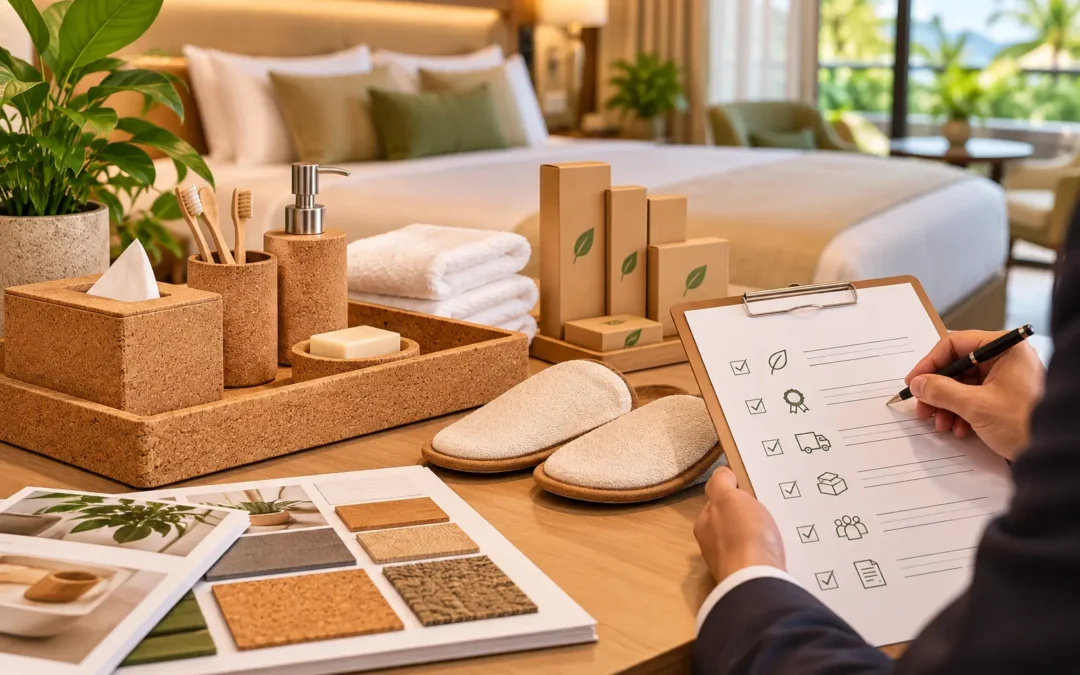
Choosing an eco-friendly amenities supplier in India comes down to a few checkable factors: material transparency, product quality, minimum order quantity, customization, lead time and after-sales support. Hotels that evaluate suppliers on these points avoid delayed deliveries, inconsistent batches and sustainability claims they cannot back up.
This checklist is written for procurement managers, purchase heads, GMs and owners of hotels, resorts and serviced apartments.
Why Supplier Choice Matters More Than Product Choice
A good product from an unreliable supplier still becomes a problem. Late deliveries leave rooms without amenities, uneven quality affects guest reviews, and unclear sourcing creates risk if guests or auditors ask questions. Guest expectations on sustainability keep rising, as covered in how important eco-friendly hotel amenities are, so the supplier you pick affects your brand directly.
The 10-Point Supplier Checklist
1. Material transparency
Ask what each product is made from, where the material is sourced and how it is processed. A reliable supplier answers clearly and specifically. If answers stay vague, treat that as a warning sign. Our guide on identifying genuinely sustainable products explains which claims to question.
2. Product range
A supplier covering several categories (personal care, bath, wardrobe, serving and stationery) lets you consolidate orders and keep a consistent material look across rooms. Check the breadth of the hospitality products range before deciding.
3. Minimum order quantity (MOQ)
MOQs differ between suppliers and products. Confirm MOQs for each item, and ask whether small trial orders are possible for new properties or pilot rooms.
4. Samples before bulk orders
Always test samples in a real room. Check finish, weight, fit, smell and how the product handles daily use. Compare the sample with what arrives in the first bulk batch.
5. Customization and branding
If you want logo printing, custom packaging or branded sets, ask what options exist, what the setup cost is and how many units are needed. Customization also supports the brand story discussed in building hotel brand image with eco-friendly amenities.
6. Lead time and delivery
Get written lead times for standard and customized orders, and ask how delivery works to your city or region. Properties in remote or leisure destinations should confirm this carefully.
7. Consistency across batches
Natural materials vary slightly, but color, size and finish should stay within a reasonable range between orders. Ask how the supplier checks quality before dispatch.
8. Durability and real-world performance
Products that break or wear out quickly cost more over time, whatever the unit price. Operational durability should be a core criterion, not an afterthought.
9. Pricing structure
Compare cost per room per month rather than unit price alone. Ask about volume pricing, repeat-order pricing and whether packaging, branding and shipping are included or charged separately.
10. Support and communication
Check how quickly the team responds, who handles your account and how replacements or issues are managed. Good suppliers behave like long-term partners.
Questions to Ask Every Supplier
- What are the materials, and where are they sourced?
- What is the MOQ per product, and can I order a trial batch?
- Can I get samples before committing?
- What customization is available, and at what quantity?
- What is the lead time for standard and custom orders?
- How do you handle damaged or defective items?
- Can you support repeat orders at the same specification?
How Different Property Types Should Prioritize
Large hotels and chains should weigh batch consistency, lead time and volume pricing most heavily. Boutique hotels and resorts often care most about design, customization and material story. Homestays and serviced apartments usually benefit from low MOQs and easy reordering, as discussed in improving customer experience in serviced apartments.
Start Small, Then Scale
A practical approach is to pilot one product category in a few rooms, gather housekeeping and guest feedback, then roll out. For example, a property might begin with a welcome kit or a set of wooden hangers, then extend to other categories once the supplier has proven reliable.
Frequently Asked Questions
What should a hotel look for in an eco-friendly amenities supplier?
Material transparency, consistent quality, clear MOQs, customization options, reliable lead times and responsive support.
Should I order samples first?
Yes. Samples let you test products in real conditions and compare them with later bulk batches.
Can small properties and homestays order from sustainable suppliers?
Yes, but MOQs vary. Ask each supplier about trial orders and small-batch options.
How do I avoid greenwashing when choosing a supplier?
Ask for specific information about materials and sourcing, and be cautious of broad claims with no detail behind them.
If you are comparing suppliers for your property, you can learn more about Paivi, browse the shop or contact our team to request samples.