
Why Bamboo Specifically, Not Just “Eco-Friendly” in General
Hotels had plenty of sustainable materials to choose from, recycled plastics, cornstarch-based bioplastics, reclaimed wood. Bamboo pulled ahead of most of them for reasons that are fairly unglamorous and practical.
It regenerates absurdly fast. Most hardwoods take decades to mature. Bamboo reaches full growth in three to five years, and unlike trees, you don’t replant it after harvest, it simply regrows from the same root system. For an industry that needs a steady, high-volume supply of amenities every single month, that turnaround matters more than most guests realize.
It needs almost nothing to grow. No pesticides, minimal water, and it thrives on land unsuitable for most other crops. That keeps raw material costs stable in a way that reclaimed wood or specialty bioplastics can’t always match.
It’s durable enough for real hotel use. Early biodegradable alternatives had a reputation for feeling flimsy, a criticism that scared off procurement teams worried about guest experience. Bamboo amenities held up to daily handling in a way that closed that gap, removing the last real objection hotels had to switching.
Guests recognize it instantly. Unlike some sustainable materials that need an explanation on the packaging, bamboo is visually and immediately understood as “eco-friendly.” That matters commercially, hotels get sustainability credit from guests the moment they see it, without needing a paragraph of copy to explain why a product is green.
What’s Actually Being Made From Bamboo Now
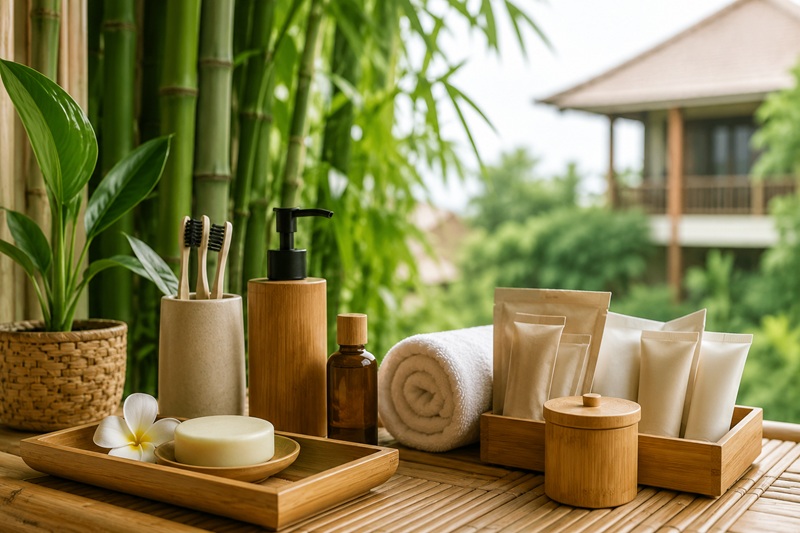
The category has expanded well past the toothbrush. Hotels are now sourcing bamboo bathroom kits, combs, razors, dental and shaving sets, refillable dispenser housings, card holders and stationery, and increasingly furniture and interior fittings for boutique properties leaning into a natural aesthetic.
This breadth is part of why the segment is growing faster than the market average. It’s not one plastic product being swapped for one bamboo equivalent. It’s dozens of small, individually unremarkable plastic items across a property, from the bathroom to the front desk, all being replaced within the same purchasing cycle, because once a hotel commits to bamboo for one category, extending it across others is a small additional decision rather than a new one.
Who’s Driving Bamboo Demand Specifically
International chains setting new baselines. Global hospitality brands operating across the region have been formalizing sustainability commitments, and bamboo has become a common default within those commitments because it’s easy to source at scale and easy to communicate to guests.
Boutique and wellness properties leading on aesthetics, not just ethics. For design-led hotels and resorts, bamboo isn’t just an operational choice, it fits the natural, warm aesthetic these properties are already selling. The material does double duty as both a sustainability statement and a design one.
Mid-market hotels catching up on cost, not just conscience. As bamboo processing has scaled up across the region, unit costs have come down. Mid-market and business hotels, the largest segment by room count in most Asia-Pacific markets, are increasingly switching because bamboo has simply become price-competitive with plastic, not only because of brand pressure.
India’s Place in the Bamboo Story
India has a natural advantage here that’s easy to overlook: it’s one of the largest bamboo-growing regions in the world, with an expanding hospitality sector reaching well beyond metro cities into resort towns, pilgrimage circuits, and boutique wellness destinations, exactly the kind of properties most likely to lead on sustainable sourcing.
That’s the space Paivi operates in, supplying bamboo-based amenities and guest essentials to hotels navigating this shift. We’ve written before about why hotels are moving toward bamboo specifically, and about what eco-friendly amenities actually mean for a property’s guest experience. This regional market growth is the wider context behind both of those decisions, a shift in hospitality purchasing that individual hotels are responding to one restocking order at a time.
What This Means If You’re a Hotel Buyer
If your property hasn’t made the switch yet, the market data suggests you’re now behind rather than early. Bamboo outpacing the broader eco-amenities category’s already-strong growth rate means this isn’t a passing preference, it’s becoming the standard hotels are expected to meet, the same way clean bedding or reliable Wi-Fi became non-negotiable a decade ago.
The properties moving early aren’t just avoiding future catch-up costs. They’re capturing the guest loyalty and review advantage that comes with acting before it’s the industry norm rather than after. If you’re weighing where to start, browsing Paivi’s current amenities collection is a reasonable first step, it covers most of the bamboo categories driving this growth, from bathroom kits to everyday guest accessories.